

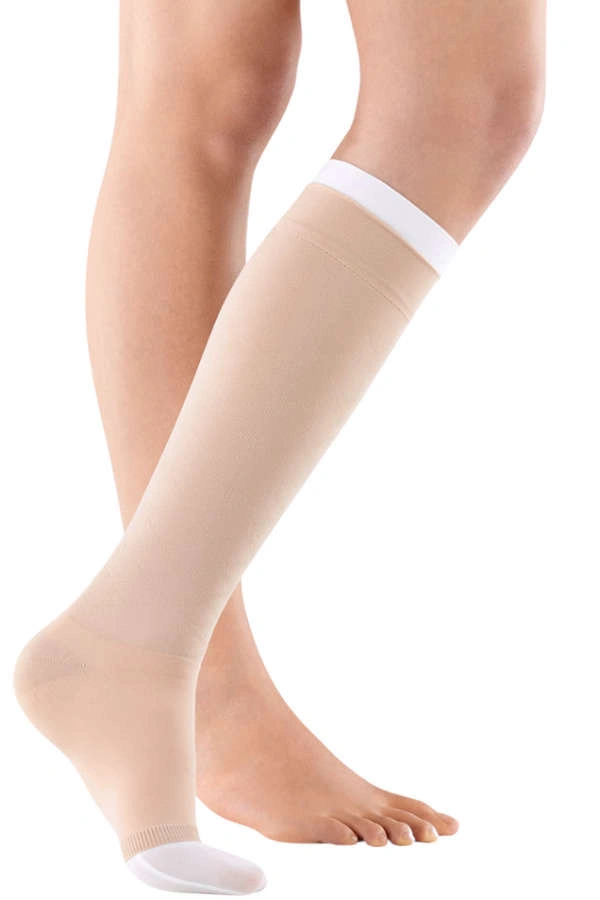
Description
Ulcer Bilayer Stockings – Healing Support for Ulcers
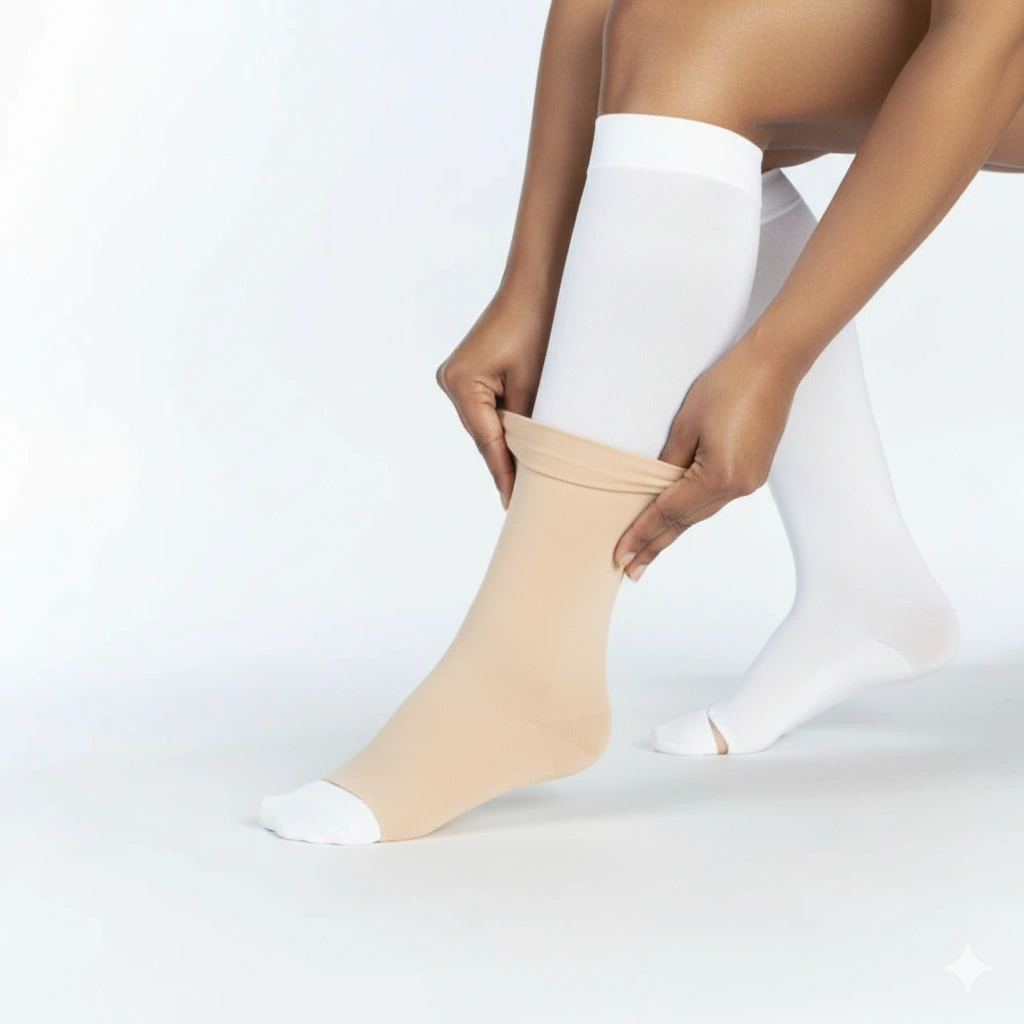
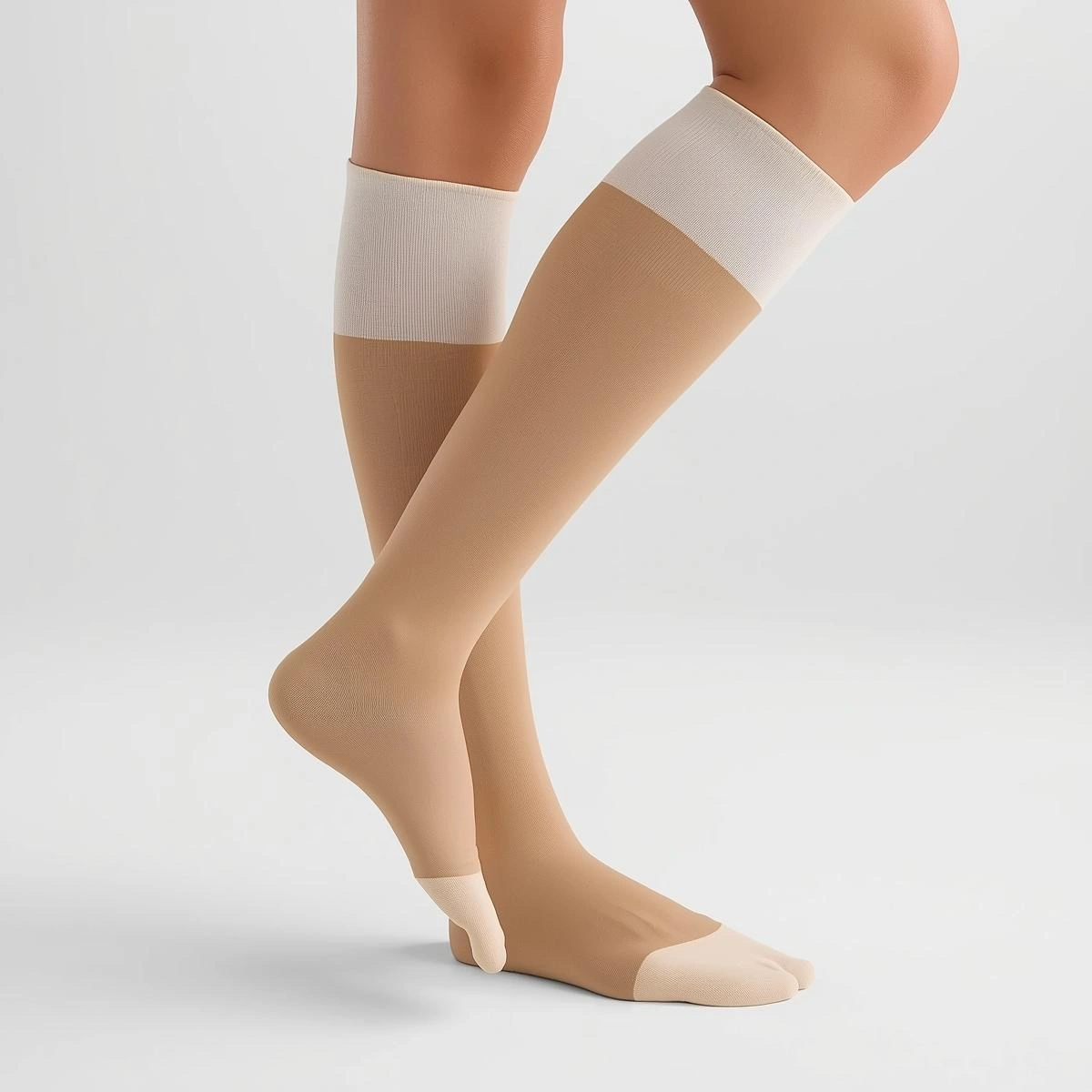
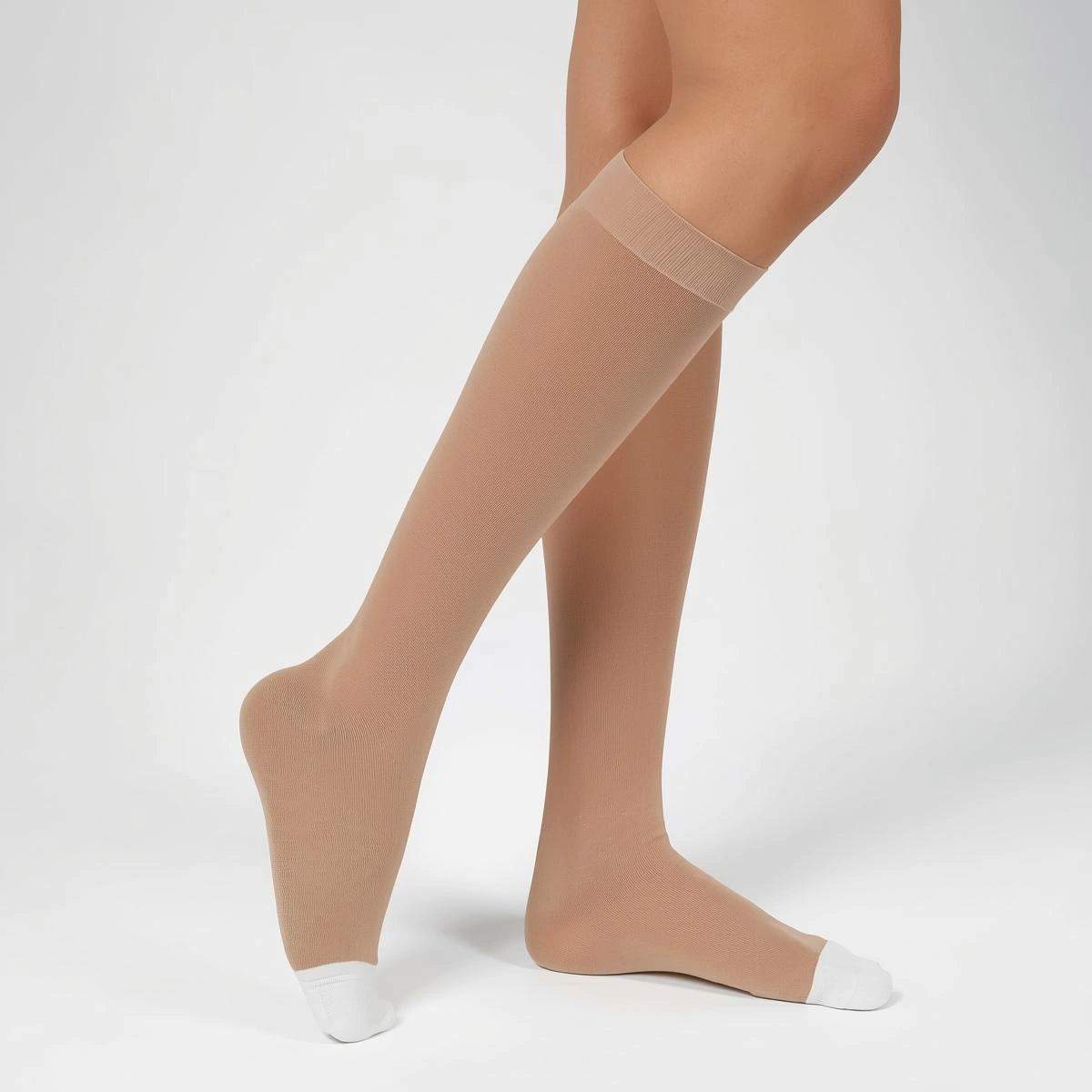
Ulcer Bilayer Stockings are a specialised medical compression solution created for patients suffering from venous leg ulcers and selected diabetic foot ulcers. These stockings combine two layers – a soft inner liner and a medical-grade compression outer stocking – to provide targeted compression support, help maintain wound dressings in place, and reduce the recurrence of ulcers.
Venous and diabetic ulcers are a significant healthcare concern worldwide, particularly among people affected by diabetes, obesity, sedentary lifestyles, ageing, and chronic venous insufficiency.
Ulcer Bilayer Stockings are a specialised compression therapy option that can support ulcer management, patient mobility, and quality of life when used appropriately. Unlike traditional multilayer bandages that can be bulky and difficult to apply, bilayer stockings are lightweight, washable, and convenient for daily use.
At Venous-On, we provide high-quality, affordable, and patient-friendly bilayer stockings designed around medical compression requirements and suitable for healthcare providers and patients across international markets.
Why Bilayer Stockings?
The treatment of venous ulcers and selected diabetic foot ulcers may require consistent compression therapy to manage swelling and support circulation. While single-layer compression stockings can provide support, they may not always provide the same wound-dressing stability and layered functionality offered by a dedicated bilayer system.
This is where Ulcer Bilayer Stockings offer a practical advantage. They are specifically designed with a two-layer structure that combines medical functionality with patient comfort:
1. Dual-Layer System for Better Healing Support
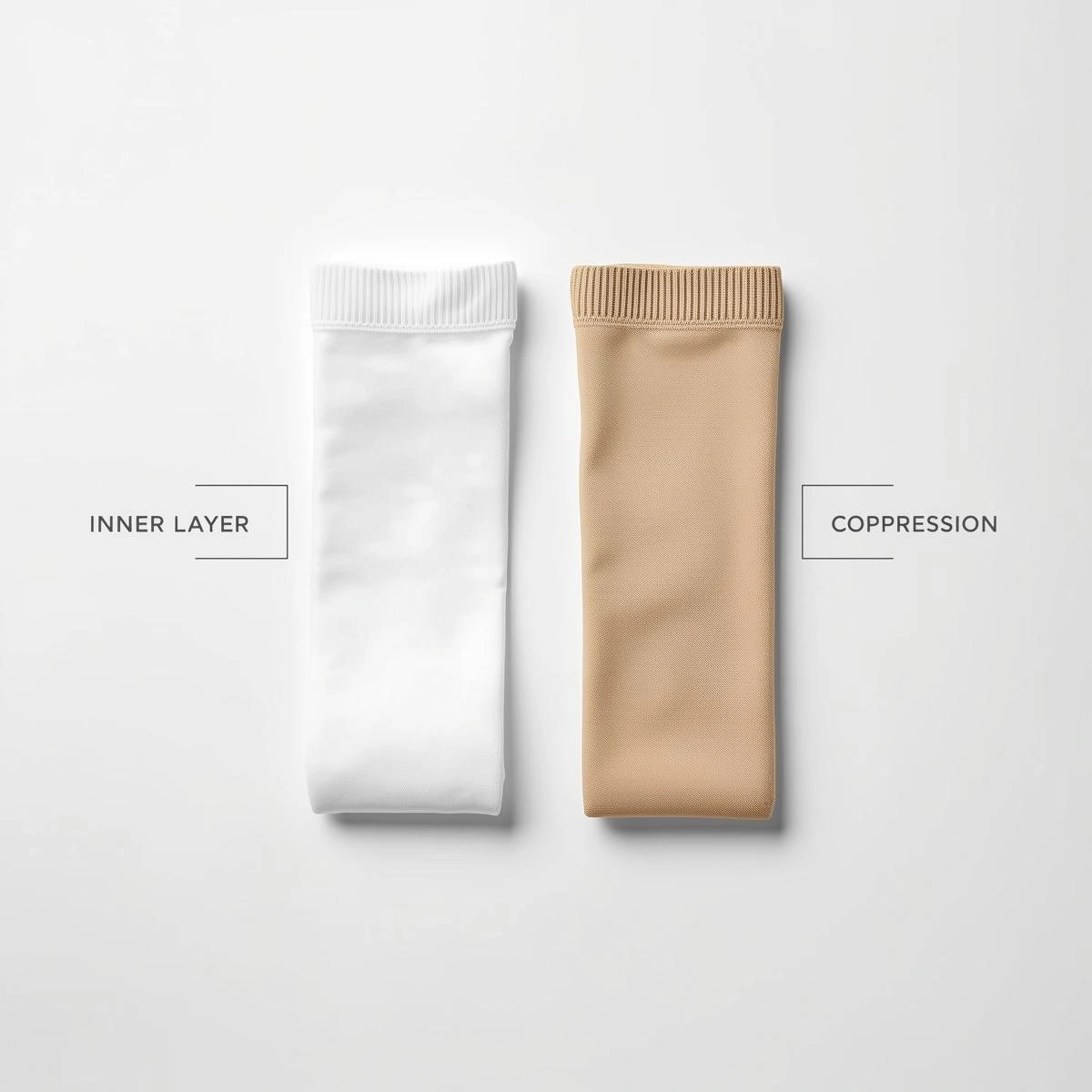
- The inner liner stocking is soft, easy to wear, and helps hold wound dressings securely in place. It provides mild compression to stabilise the leg and minimise dressing displacement.
- The outer compression stocking delivers medical-grade graduated compression (Class 2 or Class 3, as prescribed) to help manage venous pressure and swelling.
Together, these layers provide supportive compression and wound-dressing stability, helping patients follow their prescribed ulcer-management routine.
2. Improved Patient Compliance
One of the biggest challenges in ulcer management is patient compliance. Traditional multilayer bandages can be difficult to apply correctly, require regular replacement, and may feel uncomfortable in warm or humid environments.
Bilayer stockings, on the other hand:
- Are easy to wear and remove.
- Provide consistent compression without frequent reapplication.
- Can be washed and reused with proper care.
This can make regular use more practical for patients who require long-term compression therapy.
3. Clinically Recommended by Specialists
Vascular surgeons, diabetologists, wound care specialists, and other healthcare professionals may recommend Ulcer Bilayer Stockings for appropriate patients requiring compression therapy. Bilayer compression systems have also been used in clinical settings internationally as part of venous ulcer management.
4. Practical for Patients Worldwide
Bilayer stockings are designed to provide a more lightweight and practical alternative to bulky multilayer bandaging. Their breathable and streamlined construction makes them suitable for daily use across different climates and lifestyles.
5. Cost-Effective Long-Term Solution
Unlike disposable bandages that require frequent replacement, bilayer stockings are washable and reusable with proper care, potentially making them a more economical option for patients requiring long-term compression therapy.
Benefits for Venous & Diabetic Ulcers
Ulcer Bilayer Stockings are specialised compression products that provide targeted benefits for patients with venous and selected diabetic ulcers. By combining consistent compression with comfort and wound-dressing support, they can form an important part of an appropriate ulcer-management plan.
Here are the key benefits:
1. Supports Healing of Venous & Diabetic Ulcers
- Compression therapy supports venous return by applying controlled pressure to the limb.
- This helps manage venous pressure and blood pooling in the lower legs.
- For selected diabetic patients, appropriate compression may form part of a broader wound-care plan when adequate arterial circulation has been confirmed.
Result: Provides supportive compression as part of a comprehensive ulcer-management program.
2. Helps Reduce Recurrence of Ulcers
Ulcer recurrence is a significant concern in chronic venous disease. Even after an ulcer heals, patients may remain at risk of developing another ulcer.
- Bilayer stockings provide maintenance compression to help manage venous pressure.
- Continued use, when prescribed, may help reduce the risk of recurrence.
Result: Supports longer-term ulcer management after healing.
3. Effective Swelling & Oedema Control
- Chronic venous insufficiency can cause leg swelling and oedema.
- The outer compression layer delivers graduated pressure, with stronger pressure around the ankle that gradually decreases up the limb.
- Managing swelling can help improve comfort and mobility.
Result: Patients may experience less heaviness, discomfort, and leg fatigue.
4. Pain & Discomfort Relief
- By helping manage venous congestion and swelling, compression may reduce discomfort associated with chronic venous disease.
- Reduced swelling can also make everyday movement more comfortable.
Result: Improved comfort during daily activities for suitable patients.
5. Secure Dressing Support
- The inner liner stocking helps keep ulcer dressings securely in place throughout the day.
- This can minimise dressing movement during normal activity.
- A stable dressing can contribute to a more consistent wound-care routine.
Result: Provides a more secure and practical environment for ongoing wound care.
6. Improved Mobility & Independence
- Traditional multilayer bandages can be bulky and may make walking or wearing footwear less comfortable.
- Ulcer bilayer stockings are slimmer and more discreet.
- Their streamlined design can make everyday movement and footwear easier for suitable patients.
Result: Supports greater comfort and independence during daily activities.
7. Convenience & Hygiene
- Stockings are easy to wear and remove with appropriate instruction.
- They can be washed and reused with proper care.
- Breathable materials can improve comfort across different climates.
Result: Daily compression therapy can be more practical, hygienic, and cost-effective.
8. Recommended for Both Treatment & Prevention
- During active ulcer treatment, compression may support healing when clinically appropriate.
- After an ulcer has healed, continued compression may help reduce the risk of recurrence in suitable patients.
Result: Provides ongoing support for both ulcer management and long-term prevention.
Product Design & Layer Explanation
Ulcer Bilayer Stockings are developed with medical precision and patient comfort in mind. Their two-layer design combines wound-dressing support with therapeutic compression for patients requiring ongoing ulcer management.
The product is built around a dual-layer compression system:
1. Inner Layer – Liner Stocking
The inner stocking is designed to be worn directly over the leg and ulcer dressing.
Features:
- Soft & Skin-Friendly Fabric: Gentle on sensitive or ulcer-affected skin when appropriately fitted.
- Mild Compression (10–15 mmHg): Provides light support without exerting the higher pressure of the outer compression layer.
- Dressing Stabilisation: Helps keep wound dressings securely in place.
- Easy Application: Designed for convenient application by patients or caregivers following appropriate instruction.
- Continuous Wear: Overnight use should only be followed when specifically recommended by a healthcare professional.
Purpose:
The liner serves as the protective foundation – helping secure dressings, reduce friction, and prepare the leg for the outer compression layer.
2. Outer Layer – Medical Compression Stocking
The outer stocking is the therapeutic layer that delivers medical-grade compression.
Features:
- Graduated Compression (23–40 mmHg depending on class): Provides stronger pressure around the ankle that gradually decreases up the limb to support venous return.
- Available in Multiple Classes:
- Class 2 (23–32 mmHg): Commonly used for moderate compression needs when prescribed.
- Class 3 (34–46 mmHg): Higher compression for selected patients with more advanced venous disease, under medical supervision.
- Durable Elastic Fibres: Designed to retain compression performance with appropriate care and washing.
- Length Options: Available in below-knee and thigh-high models to match different patient requirements.
- Strong Yet Comfortable: Designed to balance compression performance with everyday wearability across different climates.
Purpose:
The outer layer provides the therapeutic compression required to help manage venous pressure and swelling as part of an appropriate ulcer-treatment plan.
3. Fabric Technology & Global Suitability
- Breathable Material: Designed to improve comfort across warm, humid, and cooler environments.
- Lightweight Design: Less bulky compared with traditional multilayer bandaging.
- Elastic Memory: Fabric is designed to return towards its original shape after use, supporting consistent compression.
- Colour & Finish: Neutral skin-tone options provide a discreet appearance under clothing.
4. Size Availability & Fit
Correct fit is essential for medical compression. Venous-On provides multiple size variants to match different leg dimensions. Patients are advised to measure:
- Ankle circumference
- Calf circumference
- Leg length (ankle to knee or thigh)
This helps ensure the stockings provide the intended compression level without being excessively tight or loose.
Usage Instructions & Care Guide
Correct use of Ulcer Bilayer Stockings is essential to achieve the intended therapeutic benefit. While the stockings are designed to be user-friendly, following proper instructions helps support effective compression and longer product life.
1. How to Wear Ulcer Bilayer Stockings
Step 1: Prepare the Leg
- Wash the leg with mild soap and lukewarm water.
- Pat dry with a clean towel. Ensure the skin is completely dry before application.
Step 2: Apply Wound Dressing
- Place the prescribed ulcer dressing directly over the wound.
- Ensure the dressing is secure and covers the affected area properly.
Step 3: Wear the Inner Liner Stocking
- Slide the liner stocking gently over the foot and leg.
- Adjust it smoothly so there are no wrinkles or folds.
- Confirm that the dressing remains in place during application.
Step 4: Wear the Outer Compression Stocking
- Place the compression stocking over the liner stocking.
- Pull it up carefully, ensuring uniform pressure distribution.
- Make sure the stocking fits firmly but is not painfully tight.
Step 5: Check the Fit
- The stocking should feel firm but comfortable.
- Toes should not feel numb, unusually cold, or significantly discoloured. If this occurs, remove the stocking and seek medical advice.
2. Duration of Use
- Daytime Wear: Stockings are commonly worn during the day according to the prescribed treatment plan.
- Night Removal: In most cases, the outer compression stocking is removed before bedtime unless specifically advised otherwise.
- Consistency: Regular use according to medical advice is important for ongoing compression therapy and recurrence prevention.
3. Do’s and Don’ts of Wearing Bilayer Stockings
Do’s:
✔ Follow medical advice regarding the appropriate compression class.
✔ Put on stockings in the morning when swelling is generally lower.
✔ Wear both layers as instructed for the intended therapy.
✔ Regularly check skin condition, particularly if you have diabetes or reduced sensation.
Don’ts:
✘ Do not fold or roll down the stockings, as this can create uneven pressure.
✘ Do not wear stockings over an unprotected open wound. Always use the prescribed dressing.
✘ Do not use damaged or overstretched stockings.
4. Washing & Maintenance
Proper care extends the life of the stockings and helps maintain their compression performance.
- Washing Method: Hand wash gently in lukewarm water with mild soap.
- Drying: Squeeze out water gently without wringing. Lay flat or dry according to the manufacturer’s instructions.
- Avoid: Do not bleach, iron, or dry-clean unless specifically permitted by the manufacturer. Avoid direct heat.
- Frequency: Wash regularly according to the manufacturer’s care instructions to maintain hygiene.
5. Storage
- Store stockings in a cool, dry place.
- Keep away from sharp objects that could damage the fabric.
- Avoid prolonged exposure to moisture and excessive heat.
Who Should Use Ulcer Bilayer Stockings?
Ulcer Bilayer Stockings are not general-use stockings. They are specialised medical compression products designed for patients with specific venous and ulcer-related conditions. The stockings should be used under medical guidance to ensure appropriate compression class, fit, and application.
Here are some groups of patients who may benefit:
1. Patients with Venous Leg Ulcers
- Individuals suffering from open or healing venous ulcers caused by chronic venous insufficiency.
- Patients experiencing skin changes, darkening, or thickening around the lower leg associated with chronic venous disease.
Benefit: Compression can support venous ulcer healing by helping manage venous hypertension and swelling.
2. Diabetic Patients with Foot Ulcers
- People with diabetes who develop foot ulcers and have been assessed as suitable for compression therapy.
- Patients with a history of slow-healing wounds in the lower leg or foot.
Benefit: May provide supportive compression and dressing stability as part of a comprehensive wound-care plan.
3. Patients with Chronic Venous Insufficiency (CVI)
- Individuals with impaired leg-vein function leading to swelling, heaviness, and skin changes.
- Patients with recurrent oedema or other symptoms associated with venous reflux.
Benefit: Helps manage swelling and venous pressure and may support long-term ulcer prevention.
4. Post-Surgical Patients at Risk of Ulcer Recurrence
- Patients who have undergone vein procedures such as vein stripping, laser ablation, or sclerotherapy.
- Those who are prone to recurrent ulcers after initial healing.
Benefit: Provides ongoing compression support when recommended as part of post-procedure care.
5. Patients Seeking an Alternative to Multilayer Bandaging
- Individuals who find traditional bandaging bulky, warm, or inconvenient, particularly when long-term compression is required.
- Patients or caregivers looking for a reusable, hygienic, and easier-to-manage compression option.
Benefit: Slim, practical design that can make daily compression therapy easier to manage across different climates.
6. Elderly Patients with Limited Mobility
- Older patients who find frequent clinic visits for re-bandaging difficult.
- Those who need a manageable compression solution at home.
Benefit: Can provide a convenient option when the patient or caregiver has received appropriate instructions.
Note: Ulcer Bilayer Stockings should not be used without medical supervision in patients with:
- Severe peripheral arterial disease (PAD).
- Critical limb ischaemia.
- Severe uncontrolled infection in the leg.
Frequently Asked Questions (FAQs)
Q1. What are Ulcer Bilayer Stockings?
Ulcer Bilayer Stockings are dual-layer compression stockings designed for patients with venous leg ulcers and selected ulcer-management applications.
- The inner liner stocking helps hold wound dressings securely in place and provides mild compression.
- The outer compression stocking delivers medical-grade pressure to support circulation and manage swelling.
They provide a practical alternative to traditional multilayer bandaging for appropriate patients.
Q2. How do Bilayer Stockings help in ulcer healing?
Bilayer stockings can support ulcer management in three main ways:
- Supporting circulation: Graduated compression helps manage venous pressure and supports venous return.
- Reducing swelling: Compression helps control oedema in suitable patients.
- Stabilising dressings: The liner helps keep dressings in place, supporting a consistent wound-care routine.
They should be used as part of a complete treatment plan under appropriate medical guidance.
Q3. Are these stockings better than multilayer bandages?
Bilayer stockings can be a more practical option for some patients, depending on the ulcer, compression requirements, mobility, and clinical assessment.
- Bandages may require professional application and regular replacement.
- Stockings can be more convenient for appropriately selected patients.
- They are generally less bulky than multilayer bandages, which can make everyday activities easier.
The appropriate compression method should be determined by a healthcare professional.
Q4. Can diabetic patients safely use these stockings?
Some diabetic patients may be suitable for bilayer compression therapy, but they should first be assessed for arterial circulation, neuropathy, skin condition, and wound characteristics.
Patients with severe arterial disease or significant complications should use compression only under appropriate medical supervision.
Q5. Do I need a doctor’s prescription to use these stockings?
Medical guidance is strongly recommended. The appropriate compression class should be selected according to the patient’s condition and clinical assessment.
- Class 2: 23–32 mmHg
- Class 3: 34–46 mmHg
Self-selecting a high-compression garment without appropriate assessment can be unsafe.
Q6. How long should I wear Ulcer Bilayer Stockings in a day?
- Stockings are commonly worn during the daytime according to the prescribed treatment plan.
- The outer compression layer is generally removed at night unless specifically advised otherwise.
- Some patients may be instructed to use the liner overnight.
The duration depends on the individual’s condition and medical advice.
Q7. How long do Ulcer Bilayer Stockings last?
Product lifespan depends on the material, frequency of use, washing method, and manufacturer’s instructions.
With proper care, compression stockings can remain effective for several months, but they should be replaced when they become damaged, overstretched, or no longer provide the intended compression.
Q8. Can these stockings be worn on both legs?
Yes. Bilayer stockings can be worn on one or both legs depending on the patient’s condition and treatment plan. Patients with bilateral venous disease may be advised to use compression on both legs.
Q9. Do these stockings cause discomfort or tightness?
When correctly fitted, they should provide firm but comfortable support.
- Significant discomfort may indicate incorrect sizing or application.
- If toes become numb, unusually cold, painful, or discoloured, remove the stocking and seek medical advice.
Q10. Are Ulcer Bilayer Stockings washable and reusable?
Yes. They are washable and reusable when cared for according to the manufacturer’s instructions.
- Wash using a suitable mild detergent.
- Allow them to dry appropriately.
- Avoid harsh chemicals, excessive heat, and improper handling.
Q11. What is the price of Ulcer Bilayer Stockings?
Prices vary depending on the compression class, length (below-knee or thigh-high), material, features, and market.
Venous-On focuses on providing affordable medical compression solutions for customers across different international markets.
Q12. Where can I buy Ulcer Bilayer Stockings?
They may be available through:
- Venous-On official sales channels
- Authorised medical distributors and pharmacies
- Healthcare and medical supply platforms
Availability, delivery options, and local purchasing channels may vary by country and region.
Q13. Can elderly patients use these stockings without help?
Some elderly patients can use bilayer stockings independently after receiving appropriate instruction. The liner stocking is generally easier to apply, while the outer compression stocking may require additional strength or assistance.
Patients with limited mobility may benefit from caregiver assistance.
Q14. Do bilayer stockings completely cure ulcers?
No. They are a supportive compression therapy, not a standalone cure. Ulcer healing requires comprehensive management, which may include:
- Proper wound care and dressing
- Management of underlying venous disease
- Blood sugar control in diabetic patients
- Assessment of arterial circulation
- Regular follow-up with healthcare professionals
Bilayer stockings can support healing and help reduce recurrence in appropriate patients, but they should be used as part of a complete treatment plan.

Basavaraj Patil –
Value for money. Earlier hospital product was very costly. This gives same support. Open toe design is very useful in hot weather.
Anitha –
Stocking material is soft and breathable. No itching problem. Two-layer system works well as advised by vascular doctor.
Hema –
I bought this for my father. Doctor advised bilayer compression. Product is same as hospital type. Washing and reuse also easy.
Naveen Kumar –
Easy to apply step by step. Even elderly can manage with little help. Compression is uniform and comfortable.
Geetha –
I am happy with the results. Leg swelling reduced and walking is better now. Product quality is medical grade.
Suma Hegde –
I am using this for venous ulcer problem. Easy to wear in two steps. Swelling has reduced after regular use. Quality is nice for the price.
Shilpa –
Good medical product. Inner white stocking is comfortable even for sensitive skin. Outer beige layer holds well and does not slip.
Ramesh –
Very good product. Doctor suggested bilayer stockings for my leg ulcer. White inner liner is soft and beige outer gives proper tightness. Comfortable for full day use.
Prakash Shetty –
Using for diabetic foot ulcer care. Compression is proper and not painful. After 3 weeks, leg pain and heaviness reduced.
Manjunath K –
Stockings fit properly below knee. Open toe is helpful. White liner protects skin and outer layer gives good compression. Satisfied with purchase.