
Description
Sequential Compression Device (SCD)
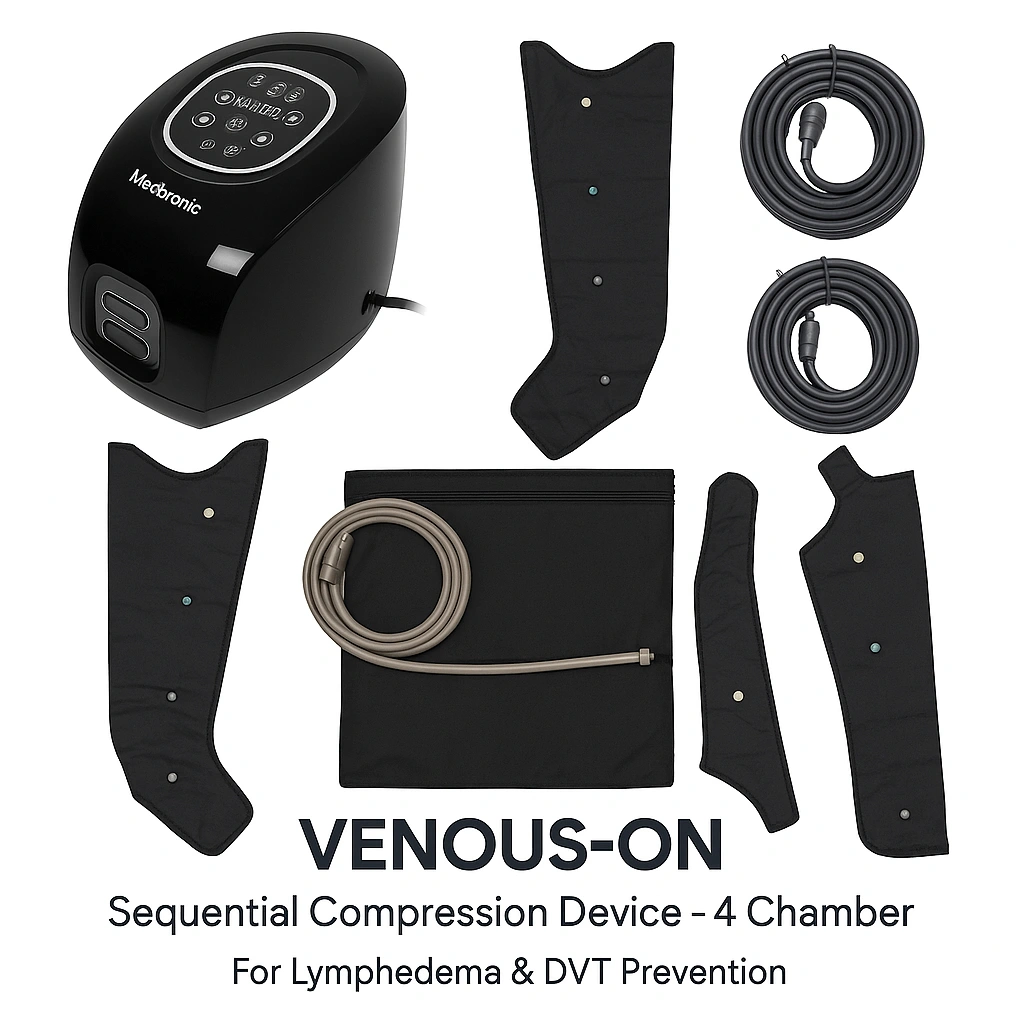
Sequential Compression Device (SCD) is a pneumatic compression therapy system widely used worldwide for the management of lymphedema, chronic venous insufficiency, post-operative swelling, and prevention of deep vein thrombosis (DVT).
The device works by inflating and deflating air-filled sleeves that are wrapped around the arms or legs. This sequential pumping action mimics the natural contraction of muscles, helping blood and lymphatic fluid flow back towards the heart.
At Venous-On, we provide high-quality Sequential Compression Devices designed for both clinical and home use. Our devices come in 4, 6, and 8 chamber variants, making them suitable for different levels of compression therapy and patient needs.
We focus on affordable healthcare solutions without compromising on medical accuracy, durability, and patient comfort. With 15+ years of expertise in compression therapy, Venous-On is trusted by hospitals, vascular clinics, physiotherapists, and patients worldwide.
How SCD Works for Lymphedema
Lymphedema is a chronic condition where lymphatic fluid accumulates in the limbs, leading to swelling, heaviness, pain, and reduced mobility. It is often seen in patients who have undergone cancer treatments (such as breast cancer or cervical cancer surgeries), lymph node removal, radiation therapy, vascular surgeries, or who suffer from chronic venous insufficiency.
Lymphedema may also occur due to varicose veins, filarial infections, cancer treatment, vascular conditions, and diabetic complications, depending on the individual and region. If left untreated, it may progress into hardening of tissues, recurrent infections, or non-healing venous ulcers.
Mechanism of Sequential Compression Device (SCD)
A Sequential Compression Device works on the principle of Intermittent Pneumatic Compression (IPC). The therapy is simple but clinically effective:
- Sleeve Application – The patient wears an inflatable sleeve around the arm or leg.
- Air Pump Activation – The device gradually fills chambers in a sequence, starting from the most distal part (foot or hand).
- Sequential Compression – Pressure is applied chamber by chamber, mimicking natural muscle contraction.
- Fluid Movement – This pumping action helps move lymphatic fluid and venous blood towards the central circulation.
- Pressure Release – After a cycle, the chambers deflate, allowing normal circulation to resume within the tissues.
This cyclical inflation and deflation can help manage swelling and fluid accumulation associated with lymphedema and other circulation-related conditions.
Benefits of SCD in Lymphedema
- Reduces Swelling (Edema): Gradual compression helps move excess fluid from the tissues.
- Relieves Pain & Heaviness: Regular therapy may help reduce sensations of limb heaviness and discomfort.
- Improves Mobility: By helping manage swelling and stiffness, patients may move more comfortably.
- Supports Skin Health: Managing fluid accumulation may help reduce complications associated with chronic swelling.
- Supports Wound Management: Pneumatic compression may be used as part of a broader treatment plan for selected venous or lymphatic ulcers.
- Supports Post-Surgical Recovery: Compression therapy may be prescribed as part of post-operative care when clinically appropriate.
Why SCD is Recommended Worldwide
- Non-invasive & Drug-Free: Provides a non-invasive approach to compression therapy without relying solely on medication.
- Home-Friendly Therapy: Selected models can provide convenient compression therapy for patients at home when prescribed and appropriately supervised.
- Doctor-Prescribed & Safe: SCDs are used in oncology, vascular, rehabilitation, and physiotherapy settings worldwide.
- Alternative or Complementary Therapy: In situations where regular access to specialised therapy is limited, SCD may provide an additional treatment option when recommended by a healthcare professional.
Variants – 4 Chamber, 6 Chamber, 8 Chamber
Sequential Compression Devices are not one-size-fits-all. Different patients require different levels of compression and therapy intensity depending on the severity of lymphedema, venous insufficiency, or post-surgical recovery needs.
At Venous-On, we provide three main SCD variants – 4 Chamber, 6 Chamber, and 8 Chamber devices. Each model is designed with specific patient requirements and clinical settings in mind.
1. 4-Chamber SCD – Entry-Level for Home Therapy
The 4-Chamber Sequential Compression Device is a practical option for home-based compression therapy. It is lightweight, affordable, and easy to operate, making it suitable for patients who require regular maintenance therapy.
Best Suited For:
- Patients with mild lymphedema (Stage 1 or early Stage 2), when recommended by a healthcare professional.
- Individuals with leg swelling associated with varicose veins.
- Post-surgical supportive care following procedures such as knee or hip replacement, when prescribed.
- Patients requiring supportive compression therapy as part of their overall treatment plan.
Advantages:
- Affordable and accessible for home users.
- Compact and portable design.
- Simple interface for convenient operation.
- May help reduce limb heaviness and discomfort with regular sessions.
This variant is suitable for patients looking for a daily supportive therapy device at home.
2. 6-Chamber SCD – Intermediate Clinical & Advanced Home Use
The 6-Chamber Sequential Compression Device offers more segmented pressure distribution compared to the 4-chamber model. By dividing the sleeve into six segments, it can provide graduated compression across the limb.
Best Suited For:
- Patients with moderate-to-severe lymphedema, when clinically appropriate.
- Post-cancer surgery patients, including those experiencing breast cancer-related arm lymphedema.
- Hospitals, rehabilitation facilities, and physiotherapy centres.
- Patients requiring ongoing compression therapy as part of venous ulcer management.
Advantages:
- Provides more segmented compression across the limb.
- Suitable for both clinical use and advanced home therapy.
- Adjustable compression cycles to accommodate patient tolerance.
- Can be selected for patients requiring more advanced compression therapy under professional guidance.
This variant balances advanced compression therapy with patient convenience, making it suitable for both professional and selected home settings.
3. 8-Chamber SCD – Advanced Therapy for Complex Cases
The 8-Chamber Sequential Compression Device is a high-precision medical device designed for patients with chronic, advanced, or complicated lymphedema conditions. It provides a more detailed pressure sequence across multiple sections of the limb.
Best Suited For:
- Severe lymphedema (Stage 3 or late Stage 2), when clinically appropriate.
- Oncology patients undergoing post-radiation or post-surgical recovery.
- Patients with chronic venous insufficiency and recurrent venous ulcers.
- Hospitals, cancer institutes, and specialised vascular clinics.
Advantages:
- Advanced compression with more precise pressure distribution.
- May assist in managing complex or fibrotic swelling as part of a comprehensive treatment plan.
- Suitable for specialised clinical applications, including selected oncology-related lymphedema cases.
- Offers customisable compression programs for patient-specific needs.
Though slightly higher in cost, the 8-Chamber SCD can be a long-term investment for patients with severe or recurring lymphedema, when recommended by their healthcare professional.
Choosing the Right Variant
- 4 Chamber: Affordable, home-friendly, for mild cases.
- 6 Chamber: Balanced option for moderate cases, suitable for hospitals and advanced home therapy.
- 8 Chamber: Advanced therapy for complex or severe cases, particularly in specialised clinical settings.
Venous-On experts help patients and hospitals in selecting the appropriate variant based on medical diagnosis, stage of lymphedema, and therapy goals.
Features & Benefits
Venous-On Sequential Compression Devices (SCDs) are built with medical precision to meet the needs of both clinical professionals and patients at home. Each model is designed to provide safe, effective, and comfortable therapy for lymphedema, venous insufficiency, post-surgical recovery, and ulcer management.
Below is a detailed overview of the key features and their direct benefits for patients and healthcare facilities worldwide.
Key Features of Venous-On SCDs
- Digital Control Unit
- Easy-to-read LCD display with programmable settings.
- Allows healthcare professionals and patients, where appropriate, to adjust pressure levels (30–120 mmHg) and cycle duration.
- Multiple Chamber Options (4, 6, 8)
- Enables therapy selection according to individual needs.
- Advanced 6- and 8-chamber models provide more segmented pressure gradients.
- Durable Medical-Grade Sleeves
- Made with high-quality, skin-friendly material.
- Available for arms, legs, and full-limb therapy.
- Easy to clean and designed for regular use.
- Portable & Lightweight Design
- Compact device suitable for a wide range of home environments.
- Can be transported for home visits or physiotherapy sessions.
- Quiet Pump Technology
- Low-noise motor helps provide a comfortable therapy experience, including during evening sessions.
- Customisable Programs
- Different inflation/deflation cycles to accommodate patient comfort.
- Memory function for saving regular therapy settings.
- Safety Features
- Automatic pressure control to help prevent over-inflation.
- Emergency stop button for patient safety.
Benefits for Patients
- Reduces Swelling & Fluid Retention – Regular therapy may help decrease limb swelling and manage fluid accumulation.
- Supports Circulation – Promotes venous return and may support circulation in appropriate patients.
- Relieves Pain & Heaviness – Managing swelling may improve comfort during daily activities.
- Supports Wound Management – May be used as part of a comprehensive treatment plan for selected diabetic and venous ulcers.
- Non-Surgical Therapy – Provides a non-invasive approach to compression therapy.
- Home-Friendly – Can provide convenient access to compression therapy for suitable patients who have been advised to use the device at home.
Benefits for Hospitals & Clinics
- Cost-Effective Rehabilitation Tool – One device can serve multiple patients in an appropriate clinical setting.
- Supports Post-Surgical Care – Compression therapy may help manage post-operative swelling and may be incorporated into appropriate DVT prevention protocols.
- Supports Patient Recovery – Can be incorporated into rehabilitation programs for selected vascular and orthopaedic patients.
- Useful Across Specialities – Oncology, vascular surgery, orthopaedics, physiotherapy, rehabilitation, and wound care centres can use SCDs where clinically appropriate.
- Reduces Burden on Staff – Easy-to-use systems can reduce the level of manual intervention required for routine sessions.
Why Venous-On SCDs are Preferred Worldwide
- Affordable Pricing – Competitive pricing makes compression therapy more accessible across different international markets.
- Trusted by Healthcare Professionals – Recommended by vascular surgeons, oncologists, physiotherapists, and other healthcare professionals where clinically appropriate.
- Worldwide Availability – Designed to serve customers across different regions and healthcare markets.
- Training & Support – Guidance can be provided to patients and healthcare staff for correct device usage.
Clinical vs Home Usage
Sequential Compression Devices (SCDs) are versatile and can be used in hospital settings under medical supervision as well as in home environments for long-term management. The choice depends on the severity of the condition, stage of lymphedema, and therapy goals.
Clinical Usage of SCDs
In hospitals and clinics worldwide, SCDs may be incorporated into vascular, oncology, orthopaedic, rehabilitation, and wound care protocols. Healthcare professionals may prescribe them for:
- Post-Surgical Recovery
- May be used as part of appropriate DVT prevention protocols following orthopaedic, vascular, or cancer surgeries.
- Helps manage post-operative swelling as part of a broader rehabilitation plan.
- Oncology-Related Lymphedema
- Breast cancer and cervical cancer patients may experience arm or leg lymphedema after lymph node removal or radiation therapy.
- 6- and 8-chamber SCDs may be selected in specialised settings for more segmented compression therapy.
- Chronic Venous Insufficiency & Ulcer Care
- May be used in vascular clinics to manage leg swelling, skin changes, and venous ulcers when clinically appropriate.
- Can form part of a comprehensive wound-care approach for selected patients.
- ICU & Long-Stay Patients
- Pneumatic compression devices may be used as part of DVT prevention protocols for selected patients with limited mobility.
Advantages of Clinical Use:
- Supervised therapy helps ensure appropriate pressure settings.
- Access to advanced 6- and 8-chamber machines.
- Can be integrated into rehabilitation programs.
- Multi-patient usage in suitable hospital and clinic settings can improve equipment utilisation.
Home Usage of SCDs
For patients with chronic or long-term conditions, home therapy may be a practical option when prescribed by a healthcare professional. Having an SCD at home can provide greater convenience and help patients maintain an appropriate therapy routine.
Best Suited For Home Use:
- Patients with mild-to-moderate lymphedema who require regular maintenance therapy.
- Individuals with swollen legs associated with varicose veins.
- Post-surgical patients discharged from hospital who require continued supportive care.
- Patients with chronic leg swelling or selected ulcers where pneumatic compression has been recommended.
Advantages of Home Use:
- May reduce the need for frequent clinic visits for suitable patients.
- Convenient daily sessions at a patient’s preferred time.
- 4-chamber devices are simple to operate when patients have received appropriate instructions.
- Quiet and compact design fits into a wide range of home environments.
Venous-On Support for Home & Clinical Users
- For hospitals and clinics: We supply bulk units, provide training for staff, and focus on device durability for regular clinical use.
- For home users: We provide guidance, demonstration videos, and after-sales support to help patients and caregivers operate the device correctly.
Why Choose Venous-On Sequential Compression Devices?
When it comes to lymphedema management, venous insufficiency treatment, and post-surgical recovery, patients and healthcare facilities worldwide need devices that are clinically precise, durable, and affordable. Venous-On is committed to delivering solutions that meet these needs.
With over 15 years of expertise in compression therapy, Venous-On has become a trusted partner for hospitals, vascular clinics, physiotherapy centres, pharmacies, and end patients across international markets.
What Sets Us Apart?
- Medical-Grade Quality at Competitive Pricing
- Devices designed with a focus on medical functionality and precision.
- Cost-effective pricing helps make compression therapy accessible across different markets.
- Multiple Chamber Options (4, 6, 8)
- Suitable for different levels of compression therapy and patient requirements.
- From basic home therapy to advanced clinical applications, we offer multiple solutions.
- Trusted by Healthcare Professionals
- Recommended by vascular surgeons, oncologists, physiotherapists, and other healthcare professionals where appropriate.
- Used in hospitals, wound care clinics, rehabilitation centres, and other healthcare settings.
- Patient-Friendly Features
- Easy-to-use interface for home users.
- Comfortable, skin-friendly sleeves for regular therapy.
- Portable, quiet, and durable design for a wide range of home environments.
- Worldwide Supply & Support
- Available to customers across different regions and international markets.
- Training and usage guidance provided for patients and caregivers.
- After-sales service and technical support available.
The Venous-On Promise
Our tagline, “Effective Compression. Everyday Relief.”, reflects our commitment to delivering:
- Support for managing swelling, pain, and heaviness.
- Support for reducing complications associated with chronic swelling when used appropriately.
- Supportive recovery after surgery and long-term management of chronic conditions.
With Sequential Compression Devices from Venous-On, patients and healthcare facilities worldwide can access practical and affordable compression therapy solutions.
FAQs – Sequential Compression Device (SCD)
Q1. What is a Sequential Compression Device (SCD)?
A Sequential Compression Device (SCD) is a pneumatic compression system used to support circulation and manage swelling in the limbs. It consists of an air pump and inflatable sleeves that wrap around the arms or legs. The device inflates chamber by chamber, creating a wave-like pressure sequence that helps move blood and lymph fluid towards the central circulation.
Q2. How does SCD help in lymphedema?
In lymphedema, lymphatic fluid collects in tissues, causing swelling. SCD applies intermittent sequential pressure that mimics muscle pumping, thereby:
- Helping move lymph fluid towards the central circulation.
- Managing limb swelling and heaviness.
- Supporting skin health when swelling is appropriately managed.
- Improving comfort and mobility for some patients.
It is a non-invasive therapy used in different healthcare settings worldwide for selected patients with cancer-related lymphedema and venous insufficiency-related swelling.
Q3. What is the difference between SCD and compression stockings?
- SCD (Sequential Compression Device): Active pneumatic compression using an air pump. It may be suitable for patients requiring intermittent pneumatic compression as part of their treatment plan.
- Compression Stockings: Static elastic garments. They are commonly used for daily compression support and management of selected mild-to-moderate conditions.
Healthcare professionals may recommend one or both depending on the patient’s condition and treatment goals.
Q4. How long should SCD be used per day?
Usage depends on the healthcare professional’s advice, device specifications, and the patient’s condition. Treatment duration can vary, so patients should follow the recommended protocol rather than relying on a fixed schedule.
Q5. Can SCD cure lymphedema permanently?
No. Lymphedema generally does not have a permanent cure, but it can often be managed through appropriate treatment. SCD may help control swelling, support fluid management, and improve quality of life as part of a comprehensive treatment plan.
Q6. Is SCD safe for diabetic patients?
SCD may be appropriate for some diabetic patients, but suitability depends on factors such as circulation, skin condition, neuropathy, and the presence of ulcers or infection. Medical supervision is recommended, particularly for patients with diabetic foot complications.
Q7. Who should not use SCD?
SCD may not be appropriate for patients with certain conditions, including:
- Acute deep vein thrombosis (DVT).
- Severe peripheral arterial disease.
- Uncontrolled infections or cellulitis in the limb.
- Certain cases of congestive heart failure or other cardiovascular conditions.
Always consult a qualified healthcare professional before starting pneumatic compression therapy.
Q8. Can SCD be used at home?
Yes. SCDs may be used at home by appropriate patients, particularly with 4-chamber models, when recommended by a healthcare professional. Venous-On provides training and guidance to help patients and caregivers operate the device correctly.
Q9. What is the cost of Sequential Compression Devices?
The cost depends on the number of chambers, features, configuration, and market. Generally:
- 4-Chamber: Affordable option for home users.
- 6-Chamber: Mid-range device for clinics and advanced home use.
- 8-Chamber: Higher-investment option for hospitals and specialised clinical settings.
Venous-On focuses on competitive pricing to make compression therapy solutions accessible across different markets.
Q10. Do insurance companies cover SCD therapy?
Coverage varies by country, insurance provider, policy, diagnosis, and whether the device has been medically prescribed. Patients should check directly with their insurance provider and healthcare professional regarding eligibility and reimbursement.
Q11. Can SCD be used with compression stockings?
Yes, in some treatment plans. Healthcare professionals may recommend a combined approach, such as:
- Compression stockings during the day for ongoing compression support.
- SCD sessions at home for intermittent pneumatic compression.
The appropriate combination depends on the patient’s condition and treatment plan.
Q12. Which variant is best for me – 4, 6, or 8 chamber?
- 4 Chamber: Often suitable for home therapy and selected mild swelling conditions.
- 6 Chamber: Suitable for more advanced compression needs in clinical or selected home settings.
- 8 Chamber: Designed for advanced or complex compression therapy applications.
Venous-On experts can help patients identify the appropriate device based on their medical condition, therapy requirements, and budget, while the final treatment choice should be guided by a qualified healthcare professional.
Q13. Where can I buy Sequential Compression Devices?
Venous-On supplies SCDs to hospitals, clinics, pharmacies, healthcare professionals, and patients across different regions and international markets. Customers can contact Venous-On for product availability, ordering information, delivery options, and usage support.
Dr. Naveen Hegde –
We are using Stockings-On SCD in our physiotherapy clinic. Results are consistent for post-operative and lymphedema patients. Device is reliable and pricing is suitable for Indian clinics.
Suresh Gowda –
I purchased 6 chamber model after doctor recommendation. Pressure control is accurate and sleeves fit well. Swelling and heaviness reduced within few weeks.
Sumathi –
After breast cancer surgery, my right hand swelling was troubling me. Hospital suggested SCD therapy. Stockings-On device helped in controlling lymphedema. Good quality sleeves and machine works smoothly.
Mathan –
Post knee surgery, I was worried about blood clots. Hospital used SCD during stay and later suggested home usage. Stockings-On device quality is very good and effective.
Physiotherapist Rahul Jain –
We recommend Stockings-On Sequential Compression Device for home continuation therapy. Patients find it easy to use and results are consistent for venous and lymphatic cases.
Lakshmi Narayana –
I bought 4 chamber SCD for my father. He has chronic leg swelling and pain. After daily usage, swelling is reduced and walking is better. Machine is simple and not noisy.
Anitha –
My mother has diabetic leg swelling. Doctor advised compression therapy. Stockings-On SCD is very helpful. We are using at home without any issue. Service support also good.
Meenakshi –
I was afraid to use machine at home, but Stockings-On team explained properly. Now I am comfortable using daily. Leg pain and tightness reduced.
Shoba –
I was suffering from lymphedema for many years. Manual therapy was not always possible. This SCD machine helped me maintain swelling at home. Worth the investment.
Ramesh Kumar –
I am using Stockings-On 6 chamber Sequential Compression Device for last 5 months. My leg swelling due to varicose veins has reduced a lot. Doctor also happy with results. Easy to use at home and pressure is comfortable.